
Livraison gratuite en Belgique et frais de port réduits à 4,99€ pour la France à partir de 59€ !

Livraison gratuite en Belgique et frais de port réduits à 4,99€ pour la France à partir de 59€ !

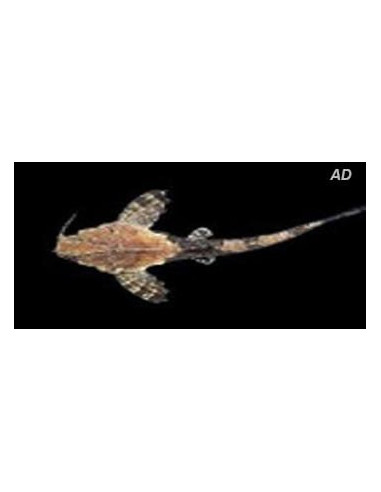
Discreet wild banjo catfish for calm bottom aquariums
Bunocephalus coracoideus, commonly known as the banjo fish, is a highly original, perfectly camouflaged bottom-dwelling catfish that spends most of its time resting or half-buried in the substrate. The specimens shown here are wild cat fish measuring 5-6 cm, and should be kept in a mature, calm, well-oxygenated aquarium.
Bunocephalus coracoideus is native toSouth America, where it is found in several basins (including theAmazon) in calm rivers, backwaters, flooded areas and forest margins. It mainly frequents sandy-muddy bottoms covered in dead leaves, branches and plant debris, in waters that are generally mild to slightly acidic, poorly lit and rich in natural hiding places.
Sexual dimorphism is not very marked. In adults, females are generally more plump, especially when full of eggs, while males have a slightly slimmer body.
Banjo fish, especially wild fish, appreciate stable water with low levels of waste and gentle filtration with moderate stirring. Regular water changes (20-30% per week) are recommended.
A decor rich in dark hiding places and leaf litter reproduces its natural biotope and greatly reduces stress. This is a fish that appreciates tanks that are not very agitated, with a calm open-water population.
Bunocephalus coracoideus is a crepuscular, nocturnal fish with a very peaceful temperament. During the day, it often remains motionless, resting on the bottom or partially buried, becoming more active as night falls.
It can cohabit with robust prawns and small fish, but very small or weak prey can be eaten opportunistically, especially at night.
An omnivore with carnivorous tendencies, the banjo fish feeds mainly onbenthic invertebrates and organic matter. In aquariums, care must be taken to ensure that the food reaches the bottom, especially in the presence of live fish in open water.
Feeding at the end of the day or the very beginning of the night helps to respect the fish's natural rhythm and ensure it eats enough.
Breeding Bunocephalus coracoideus in aquariums is a rare and tricky business, particularly with wild specimens. It is best reserved for experienced aquarists.
Our Bunocephalus coracoideus Wild are prepared with the greatest care in our Aquabota fishroom. Each fish is selected, acclimatised and observed before shipping to ensure optimum health, which is particularly important for wild bottom feeders.
If you have any questions before or after placing your order, our Aquabota team will be happy to advise you on compatibility with your population, the choice of decor and the ideal parameters for your Bunocephalus coracoideus.
Data sheet
Specific References
Les animaux vivants suivent un protocole de livraison specifique avec expedition controlee et livraison contre signature.
Acclimatez progressivement vos poissons a la temperature et aux parametres de votre aquarium avant introduction.


Cumulez des points a chaque commande et transformez-les en bons de reduction.
Plus vous achetez, plus vous economisez.